

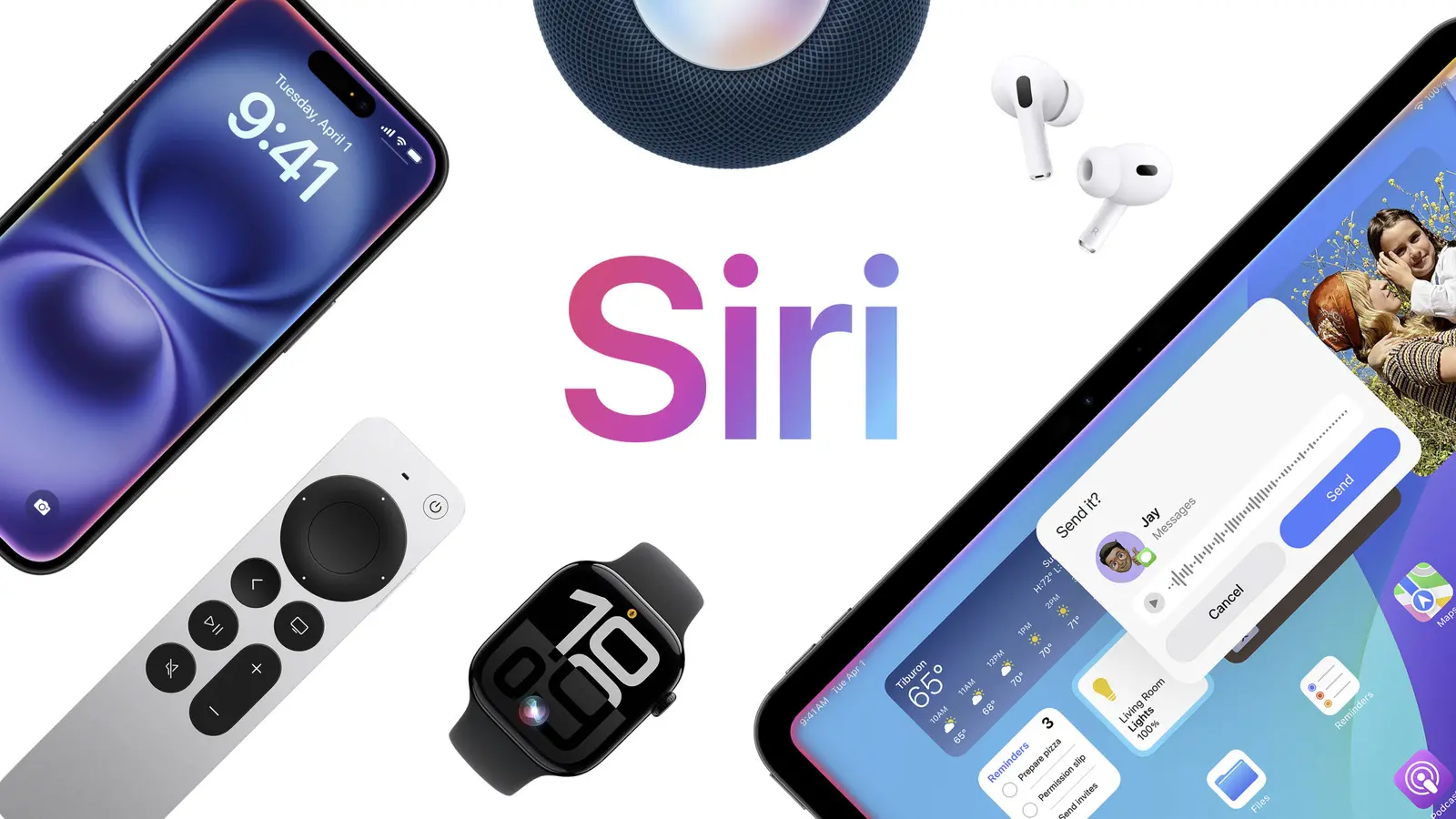
Apple has agreed to pay $250 million to settle a class action lawsuit that accused the company of deceiving U.S. iPhone buyers about the availability of an upgraded, AI-powered version of Siri. The settlement, which must be approved by a federal judge, covers purchasers of the iPhone 16 lineup and iPhone 15 Pro models. These devices were marketed as being capable of running Apple Intelligence, a suite of artificial intelligence features that included a more contextual and proactive Siri. However, nearly two years after the initial announcement at WWDC 2024, the enhanced Siri has yet to ship.
Background of the Lawsuit
The class action, filed in early 2025, alleged that Apple violated consumer protection laws by advertising features it knew would not be ready within a reasonable timeframe. The plaintiffs claimed that Apple’s marketing materials and public statements created a reasonable expectation that the new Siri would launch alongside the iPhone 16 in September 2024. When Apple quietly postponed the Siri update in March 2025 — five months after the iPhone 16 went on sale — consumers were left with devices that lacked the AI capabilities they were promised.
Apple did not admit any wrongdoing as part of the settlement. The company argued that it had acted in good faith and that delays were due to unforeseen technical challenges. Nevertheless, the $250 million figure represents one of the largest consumer tech settlements in recent years, signaling both the scope of the affected user base and the potential liability companies face when pre-announcing features.
The Rise and Fall of Siri's Promise
Siri, once a pioneer in voice assistance when it was introduced with the iPhone 4S in 2011, has long lagged behind competitors like Amazon’s Alexa and Google Assistant. With the arrival of generative AI in 2023, Apple saw an opportunity to revitalize Siri. At WWDC 2024, the company unveiled Apple Intelligence, a platform that would integrate large language models (LLMs) into the operating system. A key component was a new Siri that could understand the context of on-screen content, retrieve personal data from apps, and perform actions across multiple applications — for example, finding a flight confirmation in an email and adding it to the calendar without user intervention.
The announcement generated enormous excitement, and Apple’s stock reached an all-time high. Pre-orders for the iPhone 16, which featured a new A18 Pro chip optimized for on-device AI, exceeded expectations. However, as 2024 progressed, only a fraction of the promised Apple Intelligence features materialized. Writing tools, image generation (Image Playground), and ChatGPT integration rolled out incrementally, but the marquee Siri update remained elusive. By early 2025, developers noted that internal builds of iOS 19 and iOS 20 still lacked the new Siri, and public betas showed no significant improvement.
Details of the Settlement
Under the terms of the settlement, Apple will establish a $250 million fund to compensate eligible consumers. The class includes anyone who purchased an iPhone 16, iPhone 16 Plus, iPhone 16 Pro, or iPhone 16 Pro Max in the United States before the class period end date (set as March 15, 2025). Also included are buyers of the iPhone 15 Pro and iPhone 15 Pro Max who purchased their devices after the WWDC 2024 announcement and before the class period end date. Claimants can expect payments ranging from $25 to $150 depending on the number of devices they bought and the total number of claims filed.
Plaintiffs’ attorneys have requested up to 30% of the fund — $75 million — in legal fees, plus expenses. The settlement does not require Apple to change its marketing practices, nor does it force the company to commit to any specific launch date for the delayed Siri features. Critics say this allows Apple to avoid accountability and merely shifts the cost of the delay onto consumers and investors.
Apple’s AI Strategy: Delays and Partnerships
The delay of the new Siri has been attributed to several factors. Apple initially attempted to build the assistant entirely with its own in-house LLM, codenamed “Ajax.” However, the model struggled with accuracy and efficiency, particularly when asked to process personal data across different apps. Privacy constraints — Apple’s insistence on on-device processing for sensitive tasks — further complicated development. By late 2025, Apple reportedly abandoned the in-house approach and turned to Google’s Gemini models through a partnership that allows Apple to use Google’s cloud infrastructure for certain AI tasks.
This marked a significant strategic pivot for Apple, which had long championed on-device intelligence as a key differentiator. The partnership reportedly includes revenue sharing for Gemini-powered features, and Apple has also licensed certain Gemini capabilities for use in its developer tools. The company plans to finally ship the new Siri as part of iOS 27, expected in the fall of 2027. According to internal documents leaked earlier this year, iOS 27 will also include a rewritten Spotlight search tied to Siri, an AI photo editor named “Generative Memories,” and an adaptive Siri that can maintain context across multiple sessions.
The delay has allowed competitors to consolidate their positions. Google has expanded Gemini’s integration into Android, and Samsung has launched Galaxy AI with real-time translation and call assistance. Meta’s LLaMA-based assistant, accessible via Ray-Ban smart glasses, has also gained traction. Apple’s caution, while rooted in its privacy-first philosophy, has risked ceding the AI assistant market to rivals.
Consumer Impact and Industry Reactions
For consumers who bought an iPhone 16 specifically for the new Siri, the experience has been frustrating. Many users reported confusion when Apple Intelligence features did not include the advertised assistant. Apple’s pull of the promotional ads after the delay announcement did little to quell anger. Social media campaigns using the hashtag SiriDelay gained momentum, and online petitions demanded compensation or a free upgrade path.
The settlement, while providing some financial relief, does not address the functional deficit. iPhone 16 owners who hoped for a significantly smarter assistant will have to wait at least another year for iOS 27. For those with older devices, the situation is worse: iPhone 15 Pro models will be four years old by the time iOS 27 launches, and performance of AI features on A17 Pro chips may be suboptimal.
Industry analysts have pointed out that Apple’s misstep underscores a broader challenge in the hardware-software integration cycle. When a company ties a hardware upgrade to a software promise that is not fulfilled, it damages consumer trust and invites legal action. The $250 million settlement, while large, is modest compared to Apple’s $100 billion annual revenue from the iPhone alone. Some argue that the settlement penalty is insufficient to deter similar behavior in the future.
What’s Next for Siri and Apple Intelligence
Apple remains committed to delivering the new Siri, and the partnership with Google provides a clear path forward. The company has also been researching its own next-generation AI chips, codenamed “Neural Engine 5,” which could eventually allow many tasks to move back on-device. In the meantime, Apple is expected to demonstrate a preview of the new Siri at WWDC 2027, with a public beta likely following in the summer.
Privacy advocates have expressed concern about the Google partnership, noting that even anonymized queries pass through third-party servers. Apple has responded by stating that the Gemini integration will follow its Private Cloud Compute framework, ensuring that no user data is stored by Google. However, the technical details of the privacy guarantees remain unclear.
The broader lesson for the tech industry is clear: overpromising and underdelivering on AI features carries real financial and reputational costs. As generative AI becomes central to product differentiation, companies must balance ambition with realistic timelines. Apple’s $250 million settlement may serve as a cautionary tale for others rushing to market with half-finished AI capabilities.
Source: Engadget News