

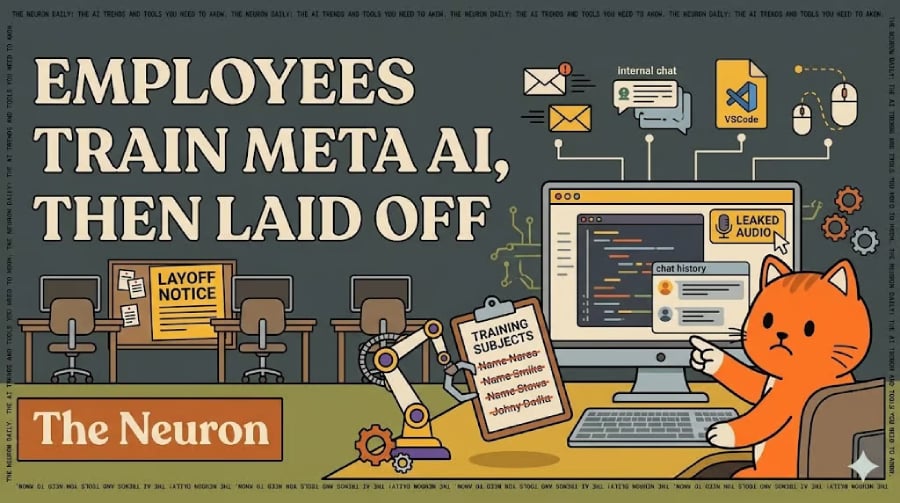
A recently leaked audio recording from an internal Meta meeting has provided new insight into why the company intensified employee surveillance in the months leading up to its massive layoffs in 2023. The audio, which was obtained and verified by multiple outlets, captures a senior Meta executive explaining that the tracking was part of a broader effort to identify underperforming employees and streamline headcount reductions. The revelation has sparked widespread debate about workplace privacy, corporate ethics, and the lengths companies will go to manage workforce reductions.
Background on Meta’s Layoffs
Meta, the parent company of Facebook, Instagram, and WhatsApp, announced in November 2022 that it would lay off 11,000 employees, marking the first mass layoff in the company’s history. This was followed by additional rounds in 2023, bringing the total reduction to over 21,000 positions. CEO Mark Zuckerberg cited overexpansion during the pandemic and a challenging macroeconomic environment as the primary reasons. However, the leaked audio suggests that internal processes, including employee monitoring, played a significant role in determining who would be let go.
Details from the Leaked Audio
The audio, recorded during a confidential all-hands meeting in early 2023, features a director from Meta’s people analytics team discussing the use of data-driven methods to evaluate employee performance. According to the speaker, Meta had implemented a system that tracked various metrics, including badge swipes, network activity, and collaboration patterns. The executive reportedly said, “We needed to understand who was truly contributing and who was just coasting. The data helped us make objective decisions during a very difficult time.” The recording also indicates that the tracking was not disclosed to employees, raising concerns about transparency and consent.
Methods of Tracking
Reports from former employees indicate that Meta used a combination of existing internal tools and newly deployed software to monitor workers. This included analyzing login times, frequency of meeting attendance, and even the volume of code commits for engineers. In some cases, managers were given dashboards that highlighted employees whose activity levels had dropped significantly. While Meta has not publicly confirmed the specifics, the leaked audio corroborates earlier whistleblower accounts that described a “productivity score” system. Critics argue that such metrics can be misleading, as they fail to capture qualitative contributions like mentoring or long-term project work.
Ethical and Privacy Concerns
The leak has intensified scrutiny on corporate surveillance practices. Privacy advocates point out that covert monitoring erodes trust and can create a culture of fear. Employment lawyers note that while companies in the United States have broad latitude to monitor workplace activity, there are legal boundaries, especially when it comes to collecting personal data without notice. In California, where Meta is headquartered, the California Consumer Privacy Act (CCPA) grants employees certain rights over their data, though exceptions exist for workplace monitoring. The controversy also invites comparisons to other tech giants, such as Amazon and Microsoft, which have faced similar backlash over employee tracking initiatives.
Industry-Wide Implications
Meta is not alone in leveraging data to manage layoffs. During the wave of tech layoffs in 2022 and 2023, many companies turned to analytics to determine cuts. However, the leaked audio stands out because it implies that Meta actively ramped up tracking specifically to target low performers, rather than relying on existing performance reviews. This approach has been criticized as a way to justify terminations and potentially avoid severance or legal challenges. Some former employees have filed lawsuits alleging that Meta used pretextual reasons to terminate workers, and the leaked audio could become evidence in those cases.
Meta’s Response and Current Status
In response to the leak, Meta issued a statement emphasizing its commitment to fair and transparent processes. A spokesperson said, “We continuously evaluate our performance management practices to ensure they are equitable and data-informed. We do not comment on internal meetings, but we are confident that our decisions were made in good faith.” The company has not denied the authenticity of the audio. Meanwhile, internal morale has reportedly suffered, with some employees expressing distrust in management. The incident has also renewed calls for stronger regulations on employer surveillance.
Historical Context of Corporate Layoffs
Large-scale layoffs are not new, but the use of real-time surveillance to guide them represents a shift. In the past, reductions were often based on seniority, departmental budgets, or subjective manager input. Today, data analytics allow companies to identify individuals with surgical precision. This trend raises questions about job security and the value of loyalty in an era of constant monitoring. For Meta, a company that built its business on user data, the application of similar tactics internally has been described as ironic by critics.
The leaked audio serves as a case study in the tension between corporate efficiency and employee rights. As more organizations adopt AI-driven people analytics, the need for clear guardrails becomes urgent. Without transparency, workers may find themselves judged by algorithms they do not understand and cannot contest. The Meta leak is likely to fuel ongoing debates in legislatures and boardrooms about the future of work.
Source: eWEEK News