

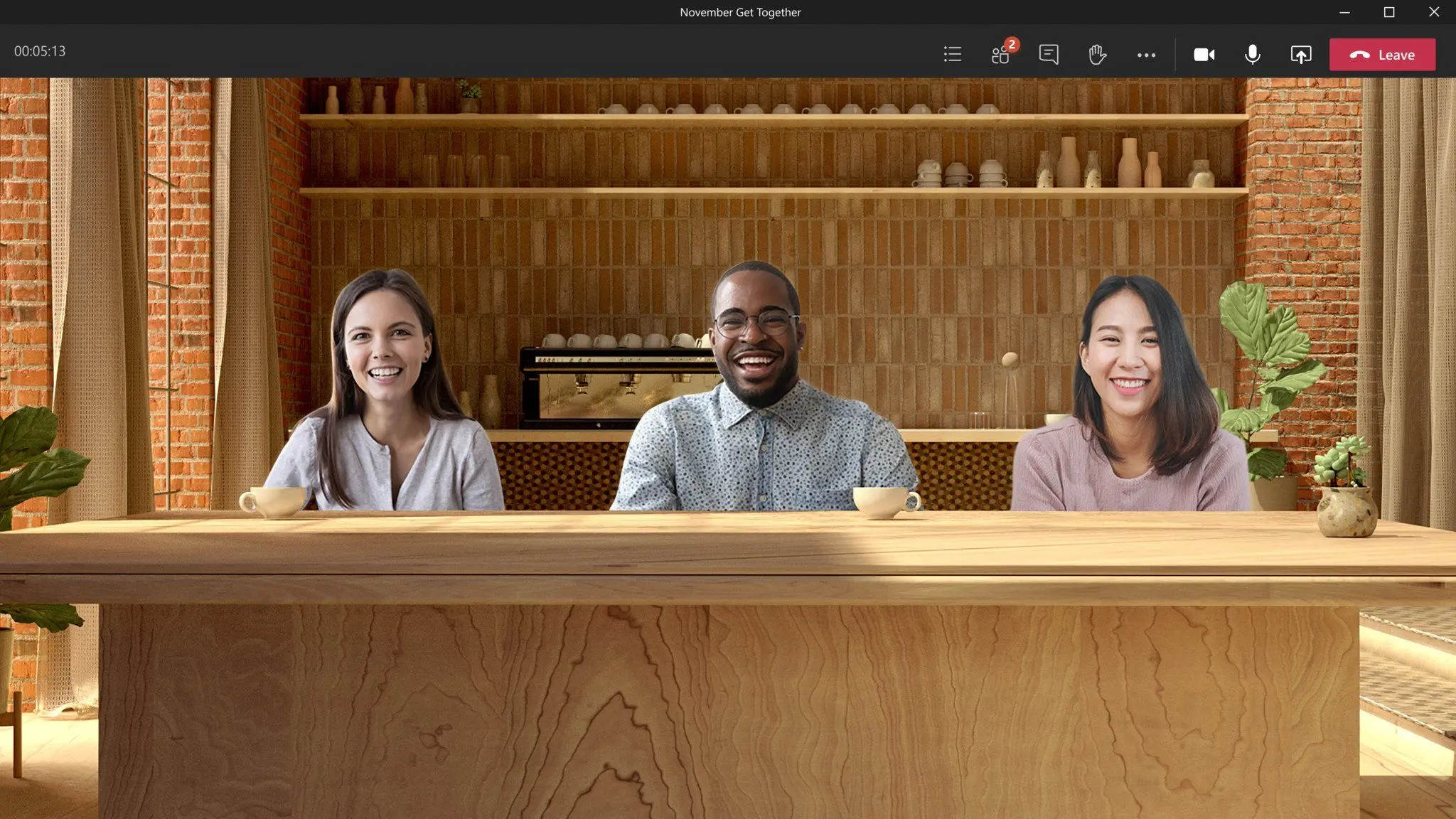
Microsoft Teams has announced the retirement of Together mode, a distinctive feature that transformed virtual meetings by placing participants in a shared, simulated environment such as an auditorium, café, or even a concert hall. The decision, confirmed in a recent update to the Microsoft 365 roadmap, marks the end of a quirky yet innovative tool that many users grew fond of during the pandemic era of remote work.
Together mode was launched in 2020 as a response to the sudden shift to remote work and the growing sense of isolation among employees spending hours in grid-style video calls. Instead of displaying participants in separate squares, Together mode used AI segmentation to place each person on a virtual stage, with backgrounds seamlessly integrated into a common scene. This design aimed to mimic the experience of sitting in a lecture hall, attending a concert, or gathering in a café, thereby fostering a more natural sense of presence and collective focus.
What Made Together Mode Special?
For many users, Together mode was more than a gimmick. It served as a psychological reset button during long meetings. By aligning participants in a simulated space, it reduced the cognitive load of processing multiple individual video feeds and their distinct backgrounds. The feature was particularly popular for town halls, large presentations, and social gatherings where the emphasis was on group cohesion rather than individual spotlighting. Microsoft reported early feedback indicating that Together mode made meetings feel more inclusive and less draining, even leading to lower heart rates among participants in some studies.
Moreover, Together mode offered customization that reflected organizational culture. Teams could choose from various scenes—an auditorium for formal presentations, a coffee shop for casual check-ins, or even a nature scene for mindfulness sessions. This variety allowed meeting hosts to set the tone and purpose of the call. The feature also supported up to 49 participants in a single scene, making it ideal for all-hands meetings where a sense of unity was critical.
The Rise and Fall of a Pandemic Tool
Together mode emerged at a time when video conferencing platforms were scrambling to differentiate themselves. Zoom had pioneered the simple grid view, but Microsoft Teams aimed to leverage its AI and cloud infrastructure to create more immersive experiences. The feature was heavily promoted in 2020 and 2021, with Microsoft CEO Satya Nadella highlighting it as a way to bridge the gap between physical and digital collaboration. However, as the pandemic waned and hybrid work models stabilized, the novelty of virtual environments began to fade.
User engagement with Together mode reportedly declined as organizations settled into routine remote operations. Many found that the feature required significant computing resources, sometimes causing performance issues on older hardware. Additionally, the rise of other collaboration tools and the gradual return to in-person meetings reduced the demand for such immersive digital spaces. Microsoft's roadmap indicated that development priorities shifted toward AI-powered meeting summaries, Copilot integration, and enhanced security, leaving Together mode as a legacy feature without further updates.
User Reactions and Nostalgia
The announcement of Together mode's retirement has sparked mixed reactions. Social media and forums like Reddit's r/MicrosoftTeams are filled with nostalgic posts from users who will miss the feature. One user remarked, 'Together mode made our weekly stand-ups feel like we were actually together in a room. It's sad to see it go.' Another commented on the psychological benefit: 'I always felt more focused in Together mode because I wasn't distracted by people's messy bedrooms or kitchen clutter.' However, others noted that the feature was rarely used in their organizations, with most defaulting to the standard grid or gallery views.
This nostalgia underscores the emotional connection people formed with a tool that helped humanize a difficult period. For many, Together mode was a symbol of collective resilience during lockdowns. Its retirement does not erase the memories of virtual baby showers, remote holiday parties, or company-wide celebrations that took place within those simulated walls.
What Replaces Together Mode?
Microsoft Teams is not removing the concept of environmental customization entirely. The platform continues to offer background effects, including blurred backgrounds and custom images. For large meetings, the 'Large gallery' and 'Together mode' (until retirement) are being consolidated into simpler layout options. Additionally, Microsoft is investing in 'Microsoft Mesh' for Teams—a mixed-reality platform that enables 3D avatars and immersive spaces for virtual collaboration. Mesh is designed for more structured interactions, such as product launches or training sessions, and may eventually fill the gap left by Together mode.
Other alternatives within Teams include the 'Front Row' layout for meeting rooms, which optimizes content placement and participant visibility, and 'Speaker Coach' for improving presentation skills. For users who crave the auditorium feel, third-party integrations like 'SpatialChat' or 'Kumospace' offer similar environments, though they require separate subscriptions and add complexity. Microsoft seems to be betting that AI-driven features will provide more practical value than static virtual scenes.
Broader Implications for Virtual Meetings
The retirement of Together mode reflects a broader evolution in video conferencing. During the pandemic, platforms competed on novelty—virtual backgrounds, reactions, filters, and immersive spaces. Now, the focus has shifted to productivity, security, and seamless integration with workflows. Features like real-time translation, meeting transcripts, and task assignment are prioritized over visual gimmicks. This transition mirrors the maturation of remote work itself: from emergency adaptation to a deliberate, hybrid strategy.
Together mode's demise also highlights the challenge of maintaining features that are resource-intensive and niche. Microsoft must allocate engineering resources to areas with the highest user impact. While Together mode had a passionate fan base, its usage metrics likely did not justify continued development. This is a common pattern in software: beloved features that fail to achieve widespread adoption eventually face deprecation.
For companies invested in team culture, the loss of Together mode may prompt a search for alternative ways to foster connection. Some may turn to periodic in-person retreats, while others might experiment with dedicated social channels on platforms like Slack or Discord. The key takeaway is that technology alone cannot replace genuine human interaction; it can only augment it. Together mode was a noble attempt to bridge the gap, and its retirement invites us to reflect on what truly makes virtual collaboration effective and meaningful.
As Microsoft Teams continues to evolve, users can expect more innovations that blend AI, mixed reality, and intelligent communication. The company's vision for meeting wellness—reducing fatigue and improving engagement—remains intact, even if the tools change. Together mode may be gone, but its spirit lives on in the ongoing quest to humanize digital spaces.
Source: Windows Central News