

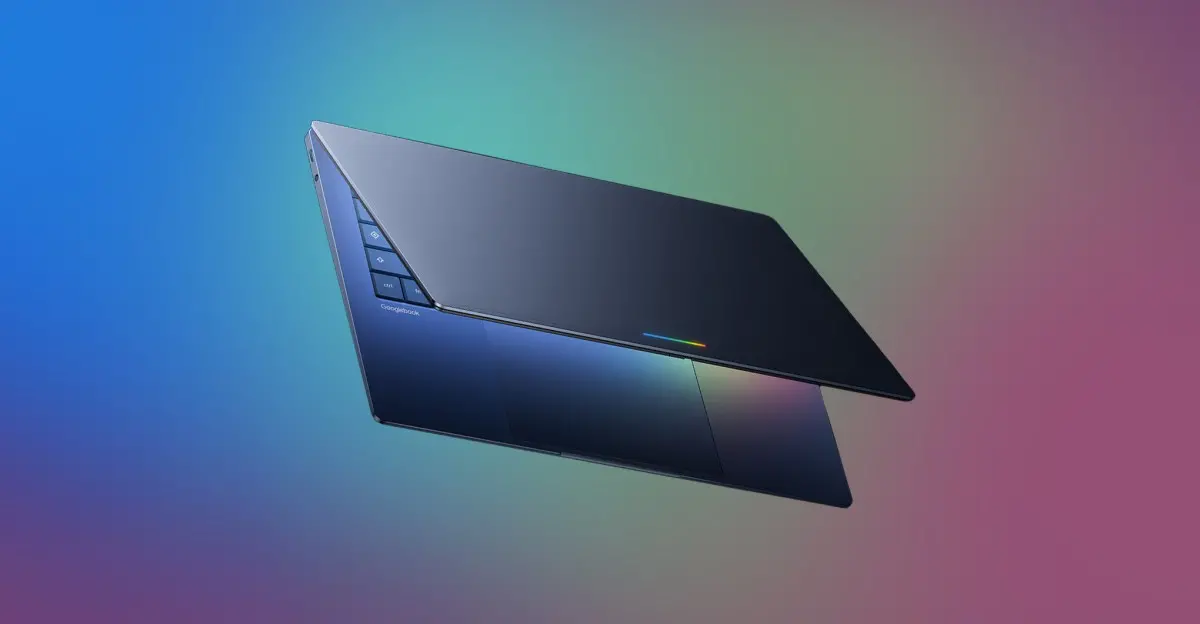
Google recently announced its new Googlebook laptop platform, and the immediate reaction from many observers has been one of confusion. Why is Google abandoning the well-established Chromebook and ChromeOS ecosystem for something that seems so similar yet so undefined? The announcement came with few concrete details about hardware specifications, pricing, or even a clear target audience. Instead, Google showcased a glowing light bar on the device and promised deep integration of its Gemini AI assistant, leaving more questions than answers.
The timing of this shift is curious. Chromebooks originally launched nearly 15 years ago and solved a genuine need in the computing market. They offered a lightweight, secure operating system that could run on affordable hardware, making them ideal for education and budget-conscious consumers. The reliance on the Chrome browser meant that most common tasks??email, web browsing, document editing??could be handled efficiently without the complexity of traditional operating systems. Chromebooks became ubiquitous in classrooms, with many schools providing them to students as personal devices.
The Evolution of ChromeOS and the Promise of Unification
Over the years, ChromeOS evolved. It gained support for Android apps, making it more versatile. The platform received regular updates and a range of hardware options from various manufacturers. However, in recent years, the excitement around Chromebooks has waned. Competitors have caught up and surpassed them in many areas. Apple's M-series chips revolutionized the MacBook lineup, offering incredible performance and battery life at competitive prices. Windows on Arm matured, providing efficient processors from Qualcomm and others. Even traditional x86 Windows laptops from Intel and AMD now offer excellent performance and battery life.
The long-rumored unification of Android and ChromeOS under a single operating system code-named Aluminium OS seemed promising. The idea was to merge the strengths of both platforms: the app ecosystem and versatility of Android with the desktop productivity of ChromeOS. This could have solved the fragmented Android tablet market and provided a seamless experience across devices. Instead, Google gave us the Googlebook, a name that critics have already derided as awkward and confusing. The operating system appears to be a rebranded Android-based desktop environment that looks and feels similar to ChromeOS, with an emphasis on Gemini AI features.
During the announcement, Google highlighted features like AI-generated widgets, seamless casting of apps from a paired Android phone, and the ability to pull files across devices. They also showed Gemini creating images based on other pictures. All of these capabilities seem achievable on a Chromebook with existing Android app support and Google's suite of services. The company provided no compelling reason why a completely new operating system and hardware lineup were necessary. The only significant differentiator appears to be the heavy integration of Gemini, which has already been available on Chromebooks since 2024 via a dedicated key.
Competitive Landscape and the Googlebook's Place
The laptop market in 2026 is fiercely competitive. Apple's MacBook Neo, launched at around $600, has become a formidable player, offering impressive performance for everyday tasks. The MacBook Air, starting over $1,000, remains a top choice for creative professionals. On the Windows side, laptops powered by Intel's latest chips and AMD's Ryzen processors deliver excellent performance and battery life. Copilot+ PCs have attempted to bring AI to Windows, albeit with mixed reception due to forced integrations. Microsoft has been working to address user backlash by streamlining Copilot features.
Google's approach with the Googlebook seems to double down on AI, flying a huge Gemini flag. Some commenters have already dubbed it the "Google Slopbook" due to concerns about AI bloatware and unclear value. The operating system is essentially scaling a mobile ecosystem up to a desktop environment, which is a constraint that Windows and macOS do not face. Both of those platforms were designed from the ground up as desktop operating systems with mature application ecosystems.
When Chromebooks debuted, they offered a clear value proposition: a simple, secure, and affordable computing experience. The Googlebook does not yet have such a clear identity. Google has not specified what problems it solves or who should buy it. The lack of hardware details, such as processor options, RAM, storage, and display specifications, makes it difficult to evaluate the new platform. The only concrete visual element mentioned is a glowing light bar on the lid, which is more aesthetic than functional.
Google's own history with operating systems is mixed. Android has been hugely successful on mobile devices, but attempts to bring it to larger screens have been inconsistent. Android tablets have lagged behind iPads in terms of apps and user experience. ChromeOS, while functional, has not seen major innovation in recent years. The Googlebook appears to be an attempt to revitalize Google's desktop ambitions, but the execution so far leaves much to be desired.
Some industry analysts have speculated that Google may be positioning the Googlebook as a premium alternative to Chromebooks, targeting users who want a more integrated Google ecosystem with AI enhancements. However, without clear pricing and performance benchmarks, it is impossible to know if the Googlebook can compete with the MacBook Neo or similarly priced Windows devices. The MacBook Neo, in particular, has set a high bar for value, offering excellent performance at a price that undercuts many Chromebooks.
Another concern is the reliance on Android apps for desktop use. While Android has millions of apps, many are not optimized for keyboard and mouse input or large screens. The experience of using a mobile app on a laptop can be frustrating, with poorly scaled interfaces and limited multitasking capabilities. Windows and macOS have decades of software optimized for desktop productivity. Even with improvements, scaling up Android apps may not be enough to satisfy power users.
Google has promised to reveal more details about the Googlebook in the coming months. Until then, the question remains: what will the Googlebook offer that Chromebooks cannot? The company must demonstrate genuine innovation and a clear use case beyond AI integration. The excitement around Chromebooks 15 years ago was justified because they addressed real needs. The Googlebook, as presented, feels like a solution in search of a problem.
Google has to show us, for real this time.
Source: The Verge News