

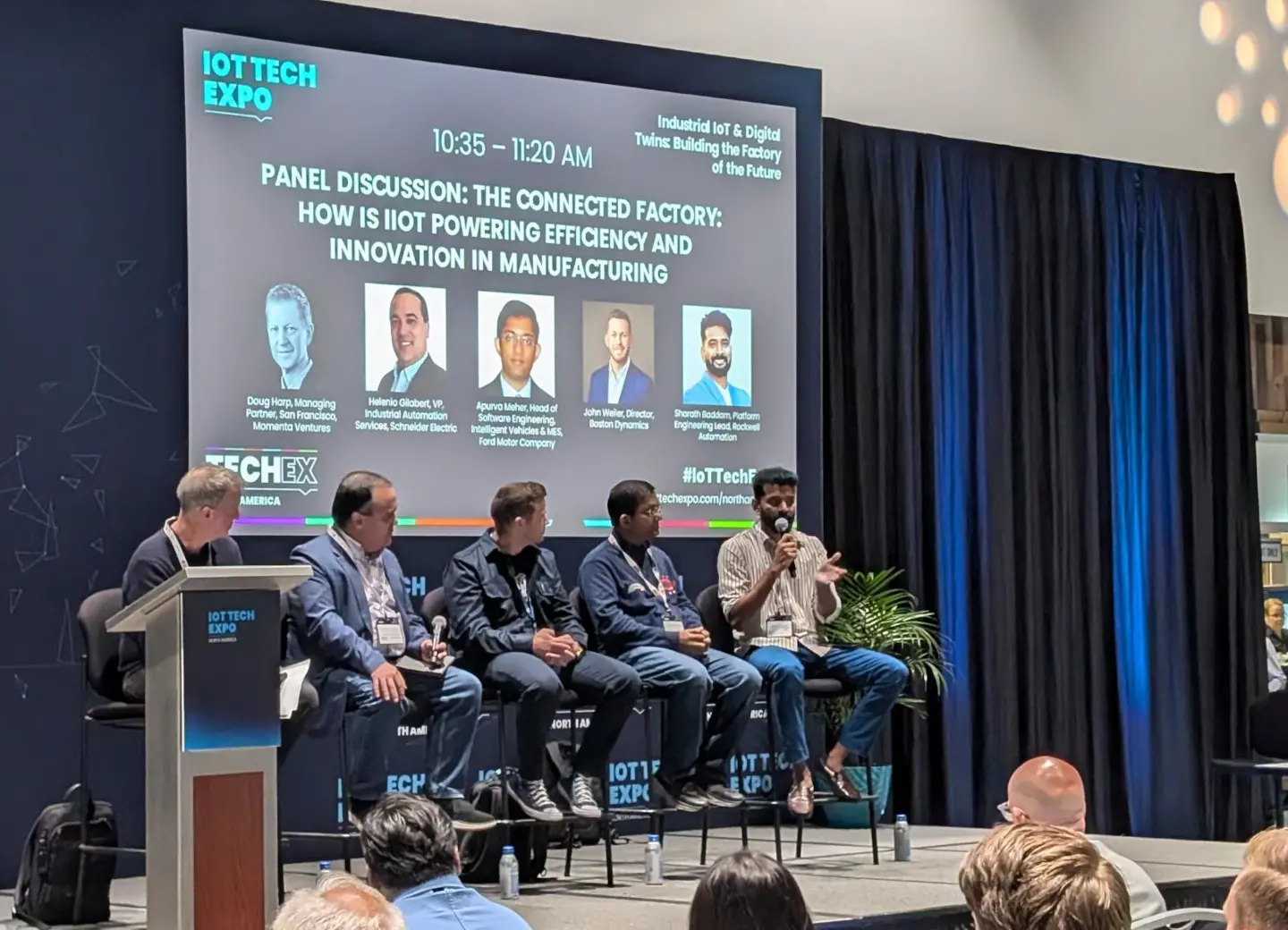
The conversation around artificial intelligence has shifted from pure algorithmic innovation to the gritty realities of deployment. At TechEx North America 2025, a recurring theme emerged: AI is not just a software problem—it is fundamentally a matter of power, infrastructure, and security. Enterprises rushing to adopt generative AI, large language models, and real-time inference engines are discovering that the most advanced models are useless without the physical and digital backbone to support them.
The Power Hunger of Modern AI
Data centers already consume about 1-2% of global electricity, but AI workloads are driving that percentage sharply upward. Training a single large language model can consume as much electricity as hundreds of households in a year. At TechEx, experts projected that by 2030, AI could account for up to 10% of global energy demand if current efficiency trends continue. This has forced organizations to reconsider where they locate their compute resources. Hyperscalers like Google, Microsoft, and Amazon are investing in nuclear power plants, geothermal energy, and long-term renewable contracts specifically to power AI clusters.
But the challenge extends beyond raw megawatts. AI chips, especially GPUs and TPUs, generate intense heat that requires advanced liquid cooling or immersion cooling systems. Many existing data centers were designed for lower-density racks and cannot handle the thermal load of AI servers. Retrofitting these facilities is costly and time-consuming, leading to a surge in purpose-built AI data centers. At TechEx, a panel of facility managers discussed how they are integrating direct-to-chip liquid cooling and rear-door heat exchangers to keep GPU clusters operational without throttling.
Infrastructure: The Hidden Bottleneck
Infrastructure for AI is not limited to power and cooling. Network bandwidth, storage architecture, and latency requirements create bottlenecks that can cripple AI applications. For instance, training distributed models across multiple nodes requires ultra-low latency interconnects like NVIDIA's NVLink or InfiniBand. Many enterprise networks still rely on standard Ethernet, which introduces enough jitter to degrade training performance significantly.
Edge AI presents its own infrastructure demands. Autonomous vehicles, industrial robots, and smart cameras require inference at the edge, where power is limited and network connectivity unreliable. TechEx speakers highlighted the need for modular edge data centers—small, ruggedized units that can be deployed in factories, warehouses, or even outdoors. These units must combine compute, storage, cooling, and security in a self-contained package. One example discussed was a mining company that deployed an edge AI system to analyze rock samples in real time, cutting processing time from hours to seconds. The infrastructure included solar panels, battery backups, and satellite links to handle remote locations.
Software infrastructure is equally critical. MLOps platforms, feature stores, model registries, and automated CI/CD pipelines for machine learning have become essential for scaling AI. Without these, organizations face version control chaos, model drift, and inability to reproduce results. TechEx devoted a full track to MLOps best practices, emphasizing that infrastructure as code should extend to data pipelines and model serving layers. Kubernetes, now the de facto orchestrator for AI workloads, is being customized with GPU scheduling and memory management plugins. Several vendors announced new tools for auto-scaling inference endpoints based on real-time demand.
Security: The Overlooked Imperative
Security was the third pillar dominating discussions at TechEx North America. As AI models become more integrated into core business processes, they become prime targets for adversaries. Three categories of threat were highlighted: adversarial attacks on models, data poisoning, and supply chain vulnerabilities.
Adversarial attacks involve manipulating input data to cause a model to make incorrect predictions. For example, adding imperceptible noise to a stop sign image can make an autonomous vehicle misread it as a speed limit sign. TechEx researchers demonstrated how easily attackers could fool image classification systems used in retail inventory management, leading to false stock-outs or overstocking. Defenses such as adversarial training, input sanitization, and certified robustness are being actively researched but remain computationally expensive.
Data poisoning is a more insidious threat. Attackers inject malicious data into the training set, causing the model to behave in a pre-defined way. A classic example is backdoor attacks where a model learns to associate a specific pattern (like a yellow sticker) with a target output. In financial services, this could be used to manipulate fraud detection systems. TechEx panelists from major banks shared that they now isolate training data from production data and run statistical anomaly detection on incoming training samples. They also enforce strict access controls on labeling platforms to prevent insider attacks.
Supply chain vulnerabilities in AI are less well understood but equally dangerous. Many organizations rely on pre-trained models from open-source repositories or model zoos. If those base models contain hidden backdoors or biases, downstream applications inherit them. The recent discovery of malicious packages in PyPI and Hugging Face repositories has prompted calls for model signing, provenance tracking, and reproducible builds. At TechEx, a consortium of cloud providers announced a draft standard for model transparency that includes cryptographic hashes, training data lineage, and evaluation metrics.
Regulatory and Ethical Dimensions
While power, infrastructure, and security dominated the technical tracks, several keynotes addressed the regulatory landscape. The European Union's AI Act, which takes effect in phases starting 2025, mandates risk classification, transparency, and human oversight. For North American companies exporting to Europe, compliance is not optional. At TechEx, legal experts advised that infrastructure decisions—such as where data is stored and processed—directly impact regulatory compliance. For example, an AI system processing medical data must ensure that inference endpoints are within jurisdictions that meet GDPR adequacy standards.
Energy regulations are also tightening. Several US states now require data centers to report their energy mix and carbon intensity. TechEx attendees learned about power purchase agreements (PPAs) for AI workloads, with some companies committing to 24/7 carbon-free energy matching by 2030. This is particularly challenging for AI because workloads are bursty and often unpredictable. Innovations in energy-aware scheduling—such as deferring non-urgent training jobs to times when renewable generation is high—are emerging as a best practice.
Ethical concerns around AI bias and fairness were addressed by a panel that included civil rights organizations. They argued that infrastructure decisions can inadvertently amplify bias. For instance, using cheaper, lower-precision hardware for inference on edge devices in low-income regions could lead to worse performance for marginalized communities. The panel called for equity audits in AI infrastructure planning, ensuring that compute resources are distributed fairly even within an organization.
Real-World Case Studies from TechEx
Several companies presented case studies that illustrated the interplay of power, infrastructure, and security. A manufacturing firm described its journey to implement AI-based predictive maintenance across 50 factories. The initial attempt using cloud-only AI failed because network latency made real-time alerts impossible. The solution was a hybrid architecture: edge servers running lightweight models for immediate anomaly detection, with cloud-based models for longer-term trend analysis. Security was ensured by encrypting all data at rest and in transit, and by using hardware security modules for model signing.
A healthcare startup demonstrated an AI system for radiology that processes X-rays in rural clinics. The infrastructure challenge was limited internet bandwidth and unreliable power. They deployed a containerized AI model on a ruggedized laptop with a built-in UPS. The model was updated via offline USB updates periodically. Security measures included on-device differential privacy to protect patient data, and automatic deletion of raw images after analysis. The system achieved 95% accuracy while consuming under 100 watts of power.
A financial services firm shared how it built a private inference infrastructure for a large language model used in customer service. Because of regulatory requirements, all data had to stay within the country and within the company's own data centers. The firm had to build a dedicated GPU cluster with liquid cooling, negotiate a new power contract with the utility company, and implement a security operations center (SOC) specifically for monitoring model requests and detecting prompt injection attacks. The project took 18 months and cost over $20 million, underscoring that AI infrastructure is not a trivial add-on but a core investment.
The Road Ahead
As TechEx North America concluded, the message was clear: AI's potential will only be realized if organizations treat power, infrastructure, and security as first-class concerns rather than afterthoughts. The next wave of innovation will not come from a new model architecture alone, but from integrated systems that can deliver AI reliably, sustainably, and safely. Attendees left with a checklists: audit power requirements for planned AI workloads, design network fabrics for distributed training, implement model security from the training phase, and plan for regulatory compliance across jurisdictions. The era of AI as a purely software play is over; hardware, heat, and hackers are now central to the conversation.
Source: AI News News