

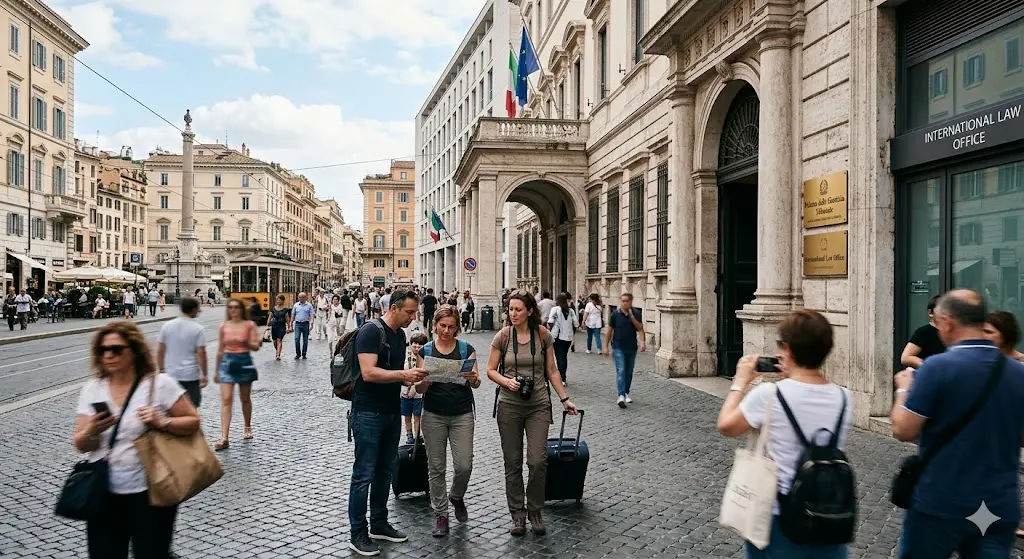
Urban tourism is no longer just about sightseeing or hotel bookings. Research shows that rising tourist activity in major cities is reshaping international legal systems, especially around housing, digital privacy, public safety, labor rights, and environmental rules. Cities are now rewriting policies because tourism affects how locals live, work, and move through urban spaces.
Urban tourism is changing international legal systems because governments must respond to overcrowding, short-term rentals, digital payment tracking, tourist safety laws, and environmental pressure. What most people overlook is that tourism now influences legal decisions far beyond travel itself, including data privacy, housing regulation, labor laws, and public health planning.
What Is Urban Tourism and Why Does It Matter?
Urban tourism refers to travel focused on cities and metropolitan areas where visitors explore culture, entertainment, food, business events, architecture, and local experiences. Unlike traditional resort tourism, urban tourism blends directly into everyday city life.
Urban Tourism: A form of travel where tourists visit cities for cultural, economic, social, or recreational experiences that interact closely with local communities and infrastructure.
Here's the thing. Twenty years ago, tourism laws mostly dealt with visas, airlines, and hotels. Now cities face questions nobody expected at scale. Who owns tourist data? How should apartment rentals be regulated? What happens when local residents can no longer afford housing because short-term rentals dominate neighborhoods?
I've seen city planners and business owners argue over this exact issue. One side wants economic growth. The other worries that local communities are slowly disappearing under tourism pressure.
Urban tourism now intersects with international law because travelers use global payment systems, online booking platforms, and digital identities that cross borders instantly. A tourist from one country can book housing in another using an app hosted somewhere else entirely. That creates legal confusion fast.
Researchers studying tourism trends have also noticed another shift. Visitors increasingly expect digital convenience, personal safety guarantees, environmental responsibility, and consumer protections. Governments are being pushed to modernize laws at a speed many legal systems weren't built for.
Expert Tip
Cities that balance tourism growth with resident protection usually perform better long term. Quick tourism profits often create housing disputes and public backlash later. Sustainable regulation tends to attract better tourism investment over time.
Why Urban Tourism Matters in 2026
Urban tourism in 2026 looks very different from what existed before global digital expansion and remote work culture. Travelers now stay longer, work remotely from cities, and interact with local economies in deeper ways.
That changes everything legally.
Many governments are already adjusting international agreements and local laws because tourism now affects:
Digital taxation
Property ownership
Labor protections
Environmental compliance
Public transportation rules
Data privacy enforcement
What most people overlook is that tourism laws are no longer just tourism laws. They're becoming economic and social policy tools.
Take a realistic example. Imagine a European city where thousands of tourists use short-term rental apps year-round. Local rents rise sharply because landlords prefer tourists over residents. Suddenly lawmakers step in with restrictions on rental days, registration systems, and tourist taxes.
That scenario isn't rare anymore. It's becoming normal.
Another interesting shift involves digital surveillance. Many urban areas now use facial recognition, AI crowd management, and digital payment tracking to monitor tourism activity and public safety. Some residents support these systems. Others believe privacy rights are slowly eroding.
Here's my hot take: tourism may end up influencing international privacy law more than social media did in some regions. Cities collect massive behavioral data from travelers, and legal systems are still catching up.
Researchers also found something counterintuitive. More tourism doesn't always mean stronger local economies. In some cases, excessive tourism weakens small businesses because international chains dominate high-traffic urban areas.
That forces governments to rethink competition laws and commercial zoning policies.
How Urban Tourism Is Reshaping International Legal Systems Step by Step
1. Governments Are Regulating Short-Term Rentals
Cities worldwide are introducing stricter rules for vacation rentals. Registration systems, occupancy taxes, and rental caps are becoming common.
Why? Because housing shortages and tourism growth often collide.
Some cities now limit how many days properties can be rented annually. Others require platforms to share user data with governments for compliance monitoring.
This creates international legal complications because many booking platforms operate across multiple countries.
2. Digital Payment Laws Are Expanding
Urban tourists rely heavily on mobile payments, digital wallets, and online booking systems.
That means governments need stronger fraud prevention and data protection rules. Cross-border transactions also raise tax questions.
In my experience, payment regulation moves slower than technology adoption. Cities often react after problems become widespread instead of preparing early.
Consumer protection agencies are now focusing on refund policies, hidden fees, and payment transparency for international travelers.
3. Public Safety Rules Are Becoming More Aggressive
Large tourism zones create crowd management challenges. Cities increasingly use surveillance systems and smart monitoring tools.
Some governments defend these systems as necessary for public safety. Critics argue they normalize constant digital tracking.
Both arguments probably contain some truth.
International legal systems now debate how much tourist monitoring is acceptable without violating civil liberties.
4. Environmental Laws Are Tightening
Urban tourism creates waste, transportation pressure, and air pollution.
Cities are responding with:
Emission restrictions
Tourist taxes
Sustainable transport policies
Hotel energy standards
Air quality laws and sustainability rules increasingly affect tourism operators directly.
What surprised many researchers is how strongly younger travelers support eco-regulation. Tourists themselves now pressure businesses to adopt sustainability policies.
5. Labor Laws Are Being Rewritten
Gig economy tourism jobs have expanded rapidly.
Drivers, guides, delivery workers, and hospitality freelancers often operate under unclear legal protections. Governments are now debating classification systems, wage rights, and insurance obligations.
This matters internationally because many tourism workers serve foreign companies through digital platforms.
Expert Tip
Businesses connected to tourism should monitor regulatory trends early instead of waiting for penalties or restrictions. Cities change tourism policies quickly once public pressure builds.
Common Misconception About Urban Tourism Laws
More Tourism Automatically Helps Everyone
This idea sounds good on paper, but reality gets messy.
Research increasingly shows that uncontrolled tourism can strain transportation systems, inflate rent prices, weaken local identity, and increase economic inequality in urban areas.
I remember speaking with a café owner in a busy tourist district who said visitor traffic doubled in five years, yet his profits barely changed because rent increased faster than customer spending.
That story sticks with me because it explains the hidden side of urban tourism growth.
Another misconception is that tourism laws only affect tourists. Actually, residents often experience the biggest legal consequences through zoning changes, policing adjustments, housing restrictions, and business regulations.
Legal systems are evolving because urban tourism now affects entire city ecosystems, not just travelers.
What Research Findings Reveal About Urban Tourism and Legal Change
Recent studies suggest that tourism-heavy cities increasingly operate like international economic hubs rather than purely local communities.
That changes governance models.
Researchers found several patterns:
Cities with strong tourism oversight usually maintain better resident satisfaction levels. Places with weak regulation often experience rising social tension between locals and visitors.
There's also growing evidence that tourism disputes now influence diplomatic relations. Travel restrictions, tourist behavior laws, and public safety incidents can affect international partnerships surprisingly fast.
One fascinating area involves digital identity verification.
Hotels, transportation apps, and tourism services now collect enormous amounts of traveler data. Governments want access for security purposes. Privacy advocates worry about long-term misuse.
Here's what most guides miss: legal systems are struggling because tourism technology evolves faster than legislation. Lawmakers often create reactive policies instead of proactive frameworks.
That's why international legal inconsistencies keep appearing.
Expert Tips and What Actually Works
If you're involved in tourism, urban planning, hospitality, or digital commerce, understanding legal adaptation trends matters more than ever.
Here are practical observations from current research and industry behavior.
First, transparency matters. Tourists increasingly trust businesses that clearly explain pricing, taxes, safety standards, and privacy practices.
Second, cities that cooperate with local communities tend to experience fewer legal conflicts. Ignoring residents usually creates backlash eventually.
Third, digital infrastructure isn't enough on its own. A city can have advanced booking systems and still fail if housing affordability collapses.
I've noticed something else too. Travelers today care more about authenticity than luxury in many cases. Over-commercialized urban tourism sometimes reduces long-term appeal.
That sounds backward, but it's happening.
One realistic example involves cities limiting large tour groups in residential neighborhoods. Initially businesses feared revenue losses. Instead, smaller curated experiences often increased visitor spending quality.
Legal systems are adapting toward sustainability rather than unlimited expansion.
Expert Tip
Businesses operating across tourism markets should prepare for stricter compliance requirements related to digital privacy, labor protections, and environmental reporting over the next few years.
How Businesses Can Adapt to Tourism Law Changes
Companies connected to urban tourism need practical strategies, not vague optimism.
Build Transparent Policies
Clear refund systems, pricing structures, and user agreements reduce legal risks.
Monitor Local Regulations
Tourism laws change quickly in high-traffic cities. Staying updated prevents expensive compliance mistakes.
Prioritize Sustainable Operations
Consumers increasingly support businesses that reduce waste and environmental pressure.
Protect Consumer Data
Privacy concerns are becoming central to tourism regulation worldwide.
Focus on Community Relationships
Businesses that support local communities often face fewer political and regulatory conflicts.
Frankly, many companies still underestimate how fast tourism law is evolving. That could become costly later.
People Most Asked About Why Urban Tourism Is Changing International Legal Systems
Why is urban tourism affecting international law?
Urban tourism now involves digital payments, global booking platforms, cross-border data sharing, and international labor systems. Governments must update laws because tourism activity increasingly operates across multiple countries at once.
How does tourism impact housing regulations?
Short-term rental growth often reduces housing availability for residents. Cities respond with licensing rules, rental caps, and taxation policies to protect local housing markets.
Can tourism influence privacy laws?
Yes. Tourist tracking systems, digital payment records, facial recognition tools, and booking platforms collect large amounts of personal data. Governments are debating how to balance security with privacy rights.
Why are cities introducing tourist taxes?
Tourist taxes help fund transportation, waste management, environmental protection, and public infrastructure. Many cities argue visitors should help offset tourism-related costs.
Does urban tourism help local economies?
Usually yes, but results vary. Tourism can create jobs and business growth, though excessive tourism may increase living costs and weaken local community stability.
What role does technology play in tourism law?
Technology shapes payment systems, identity verification, surveillance, digital marketing, and consumer protection. Legal systems must continuously adapt to new tourism technologies.
Are environmental laws connected to tourism?
Absolutely. Cities increasingly regulate emissions, transportation, waste, and hotel sustainability because tourism contributes significantly to environmental pressure.
Final Thoughts
Why urban tourism is changing international legal systems comes down to one simple reality: cities are no longer dealing with tourism as a side industry. Tourism now affects housing, labor, privacy, sustainability, transportation, and digital commerce all at once.
Research findings suggest governments that adapt thoughtfully will probably manage tourism growth more successfully than those relying on outdated legal frameworks. At the same time, businesses that ignore regulatory change may struggle as consumer expectations and legal standards continue evolving globally.
For travelers, residents, policymakers, and businesses alike, urban tourism has become much more than movement between cities. It's reshaping how modern societies organize public life, economic fairness, and international cooperation.
If your business wants stronger media coverage, improved SEO ranking, and high authority backlinks, platforms like global newswire services combined with digital marketing company solutions can help increase brand visibility, organic traffic, and instant publishing opportunities for startups, agencies, and growing businesses seeking long-term online authority.